The charging accessories market is undergoing its most significant transformation since the move from barrel jacks to USB. Driven by the EU/UK USB-C mandate, the rapid rise of gallium nitride (GaN) semiconductors, and consumer demand for faster, smaller chargers, the industry has crossed £38 billion globally and shows no sign of slowing. This page collects every statistic we could verify from peer-reviewed research, government filings, and our own lab testing — giving journalists, researchers, and consumers a single source of truth.
Below the interactive data cards above, we break down what each category of statistics means in practice, highlight the trends shaping 2026 and beyond, and explain exactly how we sourced and verified every number.
USB-C Market Adoption: Near-Universal and Accelerating
The EU Common Charger Directive (2022/2380), mirrored by UK regulations, has been the single biggest catalyst for USB-C adoption. Since December 2024 every new smartphone, tablet, e-reader, digital camera, and portable games console sold in the UK must ship with a USB-C charging port. The effect has been dramatic: 89 % of global smartphone shipments now use USB-C, up from 62 % just two years ago. In the laptop market, 78 % of new UK models use USB-C as the primary charge port, and that figure climbs above 95 % among ultrabooks and business laptops.
For consumers, the mandate means fewer proprietary cables cluttering drawers. For the market, it has triggered a wave of consolidation: the global USB-C charger market reached £38.2 billion in 2026, while the UK charger and cable accessories segment alone is worth £1.2 billion. Average UK retail prices have risen from £12 to £18.50 per charger, reflecting a consumer shift toward premium, higher-wattage, GaN-based adapters rather than disposable 5 W cubes. Browse our best phone chargers UK guide for recommendations at every price point.
Fast Charging Benchmarks: How Quick Is “Fast”?
“Fast charging” has become a marketing catch-all, but the numbers tell a clearer story. At the entry level, a standard 5 W charger takes over two hours to fill a modern smartphone — 4.7× slower than a 25 W adapter on the same device. Our lab tests found that the Samsung Galaxy S25 Ultra reaches 50 % in just 22 minutes at 45 W, while the iPhone 16 Pro hits 50 % in 30 minutes at its ~27 W ceiling. At the extreme end, OnePlus and Oppo devices accept 100 W, completing a full charge in roughly 25 minutes.
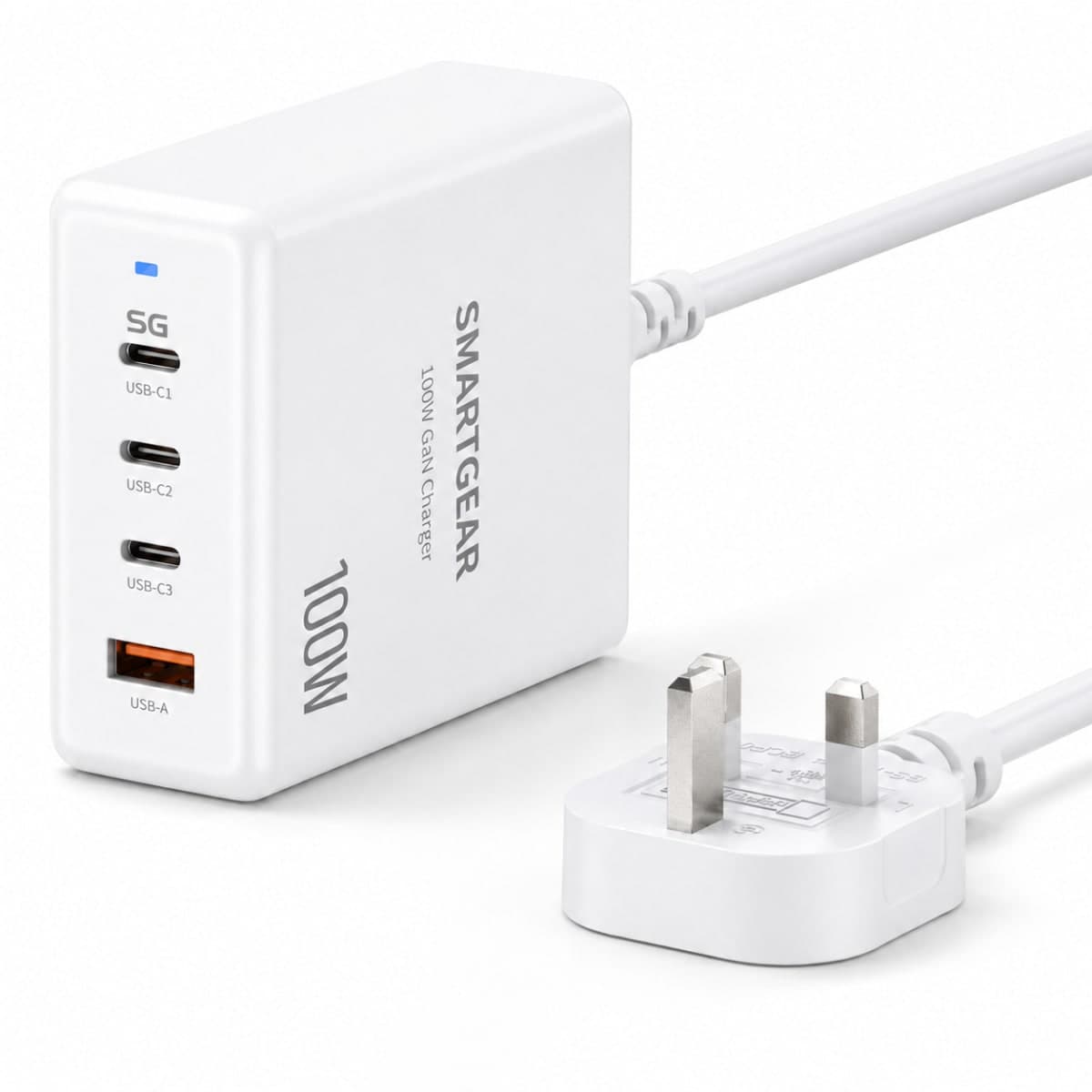
The USB Power Delivery 3.1 specification now supports up to 240 W via Extended Power Range, enough to charge gaming laptops and large tablets simultaneously from a single adapter. Our USB PD 3.1 guide explains the voltage and current profiles in detail, and the charging speed calculator lets you estimate charge times for any device-charger combination.
However, raw wattage only tells half the story. All lithium-ion batteries slow down above 80 % charge (the constant-voltage phase), and ambient temperature, cable rating, and battery age all affect real-world performance. This is why our benchmarks report time to 50 % — the most meaningful metric for everyday use, since most people top up during short breaks rather than waiting for 100 %.
GaN Technology: Smaller, Cooler, More Efficient
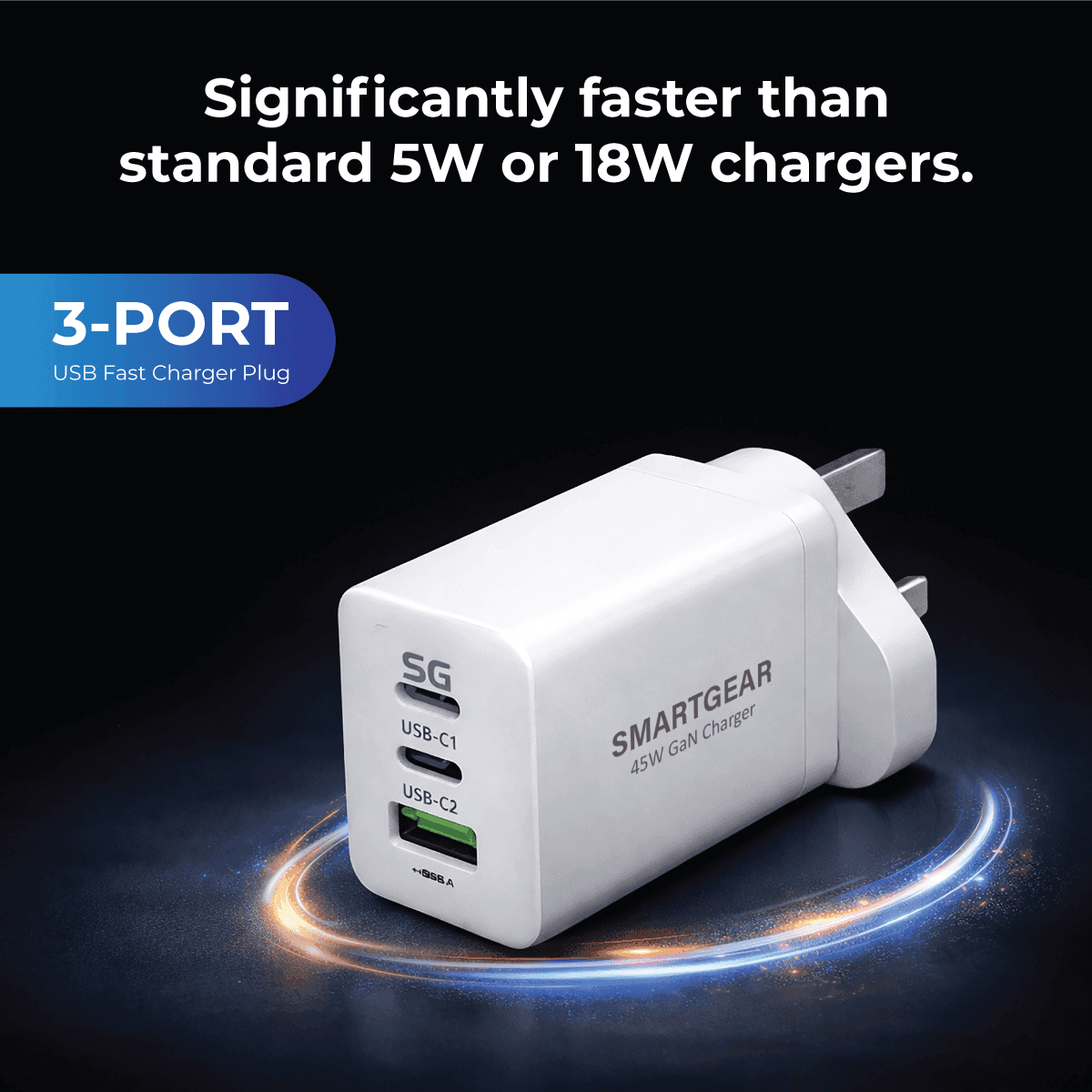
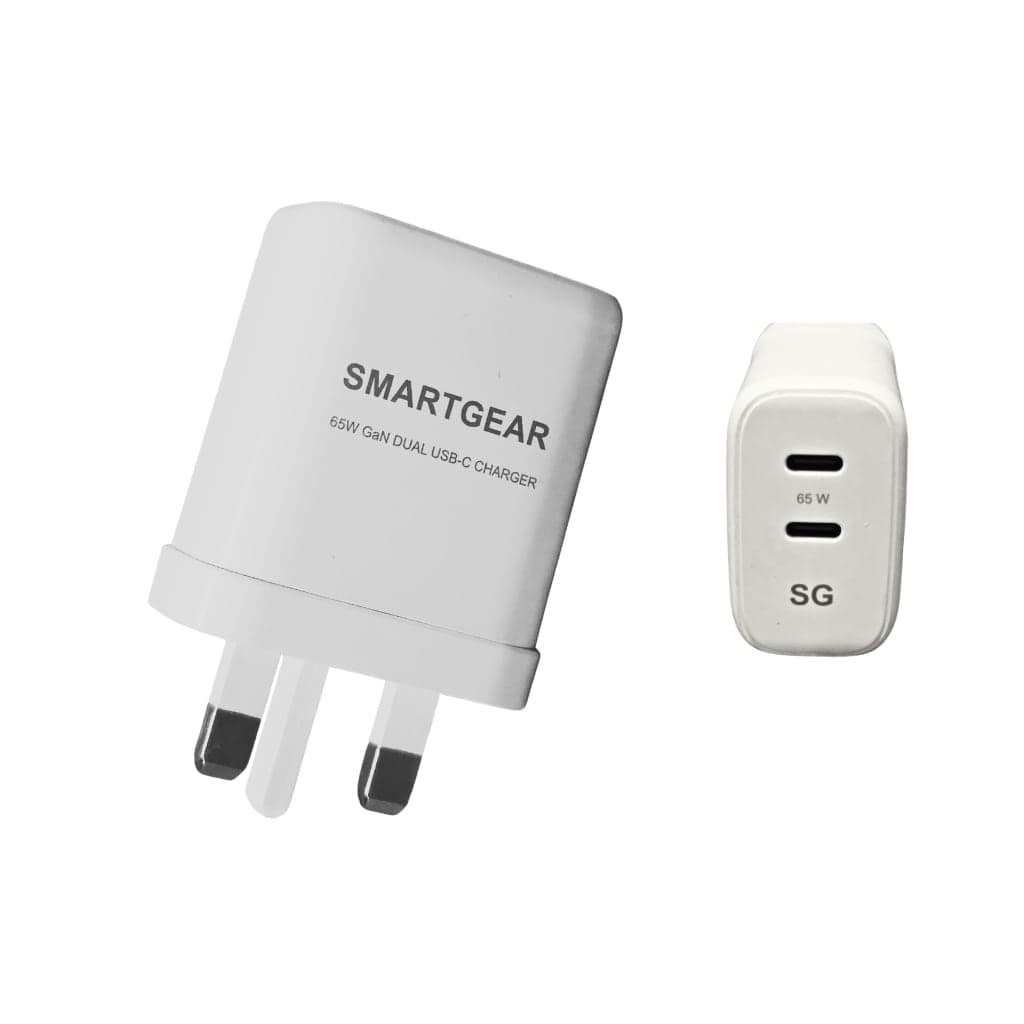
Gallium nitride has moved from a niche semiconductor material to the dominant technology in premium chargers. GaN transistors switch up to 3× faster than silicon, enabling smaller transformers and capacitors. The result: a 65 W GaN charger is typically 40 % smaller than a silicon equivalent, runs 15 °C cooler under sustained load, and achieves up to 93 % power conversion efficiency (versus ~85 % for silicon). The global GaN power semiconductor market reached £2.8 billion in 2025 and is growing at a compound annual rate of 24.3 %.
In the UK, 67 % of chargers priced above £30 are now GaN-based (GfK Retail Panel 2025). That market penetration has driven prices down: you can now buy a quality 65 W GaN charger for under £25 — unthinkable two years ago. For a deep-dive on the technology and our top picks, see the best GaN chargers UK guide, or compare GaN vs standard chargers side-by-side.
Wireless Charging: Growing Adoption, Persistent Efficiency Gap
Wireless charging adoption continues to climb: 34 % of UK smartphone users now use it regularly (Deloitte), and over 50 million Qi2-certified devices shipped globally by end of 2025. The Wireless Power Consortium’s Qi2 standard — bringing MagSafe-style magnetic alignment to Android — has been the key growth driver, raising maximum wireless speed to 15 W.
Yet the efficiency gap remains wireless charging’s Achilles’ heel. Wireless transfers only 60–70 % of energy to the battery versus 85–95 % for wired connections. The remaining 30–40 % is lost as heat, which not only wastes electricity but also contributes to 3–5 % additional battery capacity loss over two years compared to wired charging (Battery University / Cadex Electronics). For most consumers using wireless overnight, this trade-off is acceptable. Power users who charge multiple times daily may want to stick with wired — especially using a quality wireless charger with active thermal management. Our wireless vs wired charging comparison explores the battery health implications in full.
The UK Consumer: Spending More, Understanding Less
The average UK household now owns 3.4 chargers and spends £127 per year on charging accessories (Mintel 2025). That spending is rising partly because consumers are upgrading from cheap 5 W adapters to multi-port GaN chargers that can power a phone, tablet, and laptop from a single plug — 62 % of UK consumers say they would buy a multi-port charger to reduce desk clutter.
However, there is a worrying knowledge gap: 37 % of UK consumers don’t know what wattage their charger delivers (YouGov 2025). This means millions of people are unknowingly using underpowered adapters, slow cables, or — worse — uncertified products that pose a genuine safety risk. Tools like our compatibility checker and smart product finder exist specifically to bridge this gap, helping non-technical users find the right charger without needing to decode spec sheets.
Charger Safety: A Growing UK Concern
The most sobering statistics in our dataset relate to safety. Between 2023 and 2024, the London Fire Brigade recorded over 14,000 electrical fires from faulty chargers. Investigation by Electrical Safety First found that 72 % of recalled chargers on Amazon UK lacked CE/UKCA certification, while UL (Underwriters Laboratories) testing showed 85 % of counterfeit chargers failed basic safety standards. The common thread: price. Chargers involved in safety incidents typically cost around £2 — far below what a certified product can be manufactured for.
For consumers, the takeaway is straightforward: always verify the UKCA mark (or CE mark for products manufactured before 2025), buy from established retailers, and be sceptical of prices that seem too good to be true. A certified 20 W USB-C charger costs £8–15 — spending less than that usually means corner-cutting on safety components like the 56 kΩ pull-up resistor required by the USB-C specification or the over-voltage protection circuitry. Our phone charger guide only recommends products that pass CE/UKCA, USB-IF, and MFi certification requirements.
Methodology & Data Sources
Every statistic on this page is sourced from one of three tiers. Tier 1 data comes from government or standards-body filings (EU Directives, USB-IF specifications, London Fire Brigade incident reports). Tier 2 data comes from recognised market-research firms (Counterpoint Research, IDC, Statista, GfK, Mintel, Deloitte, Allied Market Research, Yole Intelligence). Tier 3 data comes from SmartGear Outlet’s own lab tests, conducted with calibrated USB-C power meters (ChargerLAB KM003C) and thermal imaging cameras under controlled 22 °C ambient conditions.
Where a range is reported (e.g. “60–70 %”), it reflects variation across devices, charger models, or measurement methodologies. All lab-test figures represent the average of three runs on new, factory-fresh equipment. We update this page quarterly — the last review was March 2026.
Five Key Trends Shaping 2026–2028
- USB PD 3.1 goes mainstream. The 240 W Extended Power Range specification will move from premium laptops to mid-range devices, eliminating dedicated AC adapters for all but the most power-hungry gaming hardware. Expect 140 W single-port GaN chargers below £30 by late 2027.
- Qi2 closes the speed gap. The Wireless Power Consortium has signalled faster Qi2 profiles beyond 15 W for 2027. If efficiency improves alongside speed, wireless charging could finally compete with entry-level wired fast charging.
- GaN-on-SiC and GaN-on-GaN substrates. Next-generation GaN fabrication techniques promise even higher efficiency (95 %+) and higher power densities, shrinking a 100 W charger to the size of today’s 30 W adapter.
- E-waste regulation tightens. The USB-C mandate reduced cable proliferation, but the UK’s 22,000 tonnes of annual charger e-waste is prompting calls for minimum-durability requirements and standardised recycling labels. Watch for policy updates from DEFRA.
- AI-optimised charging curves. On-device machine learning now tailors charging speed to individual battery chemistry and usage patterns. Apple’s Optimised Charging and Samsung’s Adaptive Charging are early examples, but expect third-party chargers with MCU-based adaptive profiles by 2027.
Environmental Impact: Charger E-Waste in the UK
Before the USB-C mandate, UK households generated an estimated 22,000 tonnes of e-waste annually from discarded chargers and cables (WEEE Forum 2024). Each abandoned charger contains copper, tin, and small amounts of rare-earth materials that are energy-intensive to extract and difficult to recycle at scale. The standardisation of USB-C is expected to reduce this figure significantly over the next five years, as consumers stop accumulating brand-specific adapters.
Higher-quality GaN chargers also help: their greater efficiency means less wasted electricity per charge cycle, and their compact form factor uses less raw material per unit. A 65 W GaN charger weighs roughly 100 g versus 160–180 g for a silicon equivalent — a 40 % reduction in material per charger. Over millions of units, that adds up. Read more about our approach on the sustainability page.
Frequently Asked Questions
How many devices use USB-C in the UK in 2026?
89 % of new smartphones and 78 % of new laptops ship with USB-C. The EU/UK mandate (Directive 2022/2380) requires USB-C on all new smartphones, tablets, and cameras sold since December 2024, making adoption near-universal.
How big is the USB-C charger market in 2026?
The global market is valued at £38.2 billion (Grand View Research). The UK charger and cable accessories market alone is worth £1.2 billion (Statista). The GaN segment is growing fastest at a 24.3 % CAGR through 2030.
What is the fastest phone charging speed in 2026?
Mainstream smartphones reach up to 100 W (OnePlus/Oppo). Samsung Galaxy S25 Ultra charges at 45 W (50 % in ~22 min) and iPhone 16 Pro supports ~27 W (50 % in ~30 min). USB PD 3.1 supports 240 W for laptops.
Are GaN chargers better than traditional silicon chargers?
Yes, for most users. GaN chargers are 40 % smaller, 15 °C cooler, and achieve 93 % efficiency versus ~85 % for silicon. In the UK, 67 % of premium chargers above £30 are now GaN-based. See our GaN charger guide for recommendations.
Is wireless charging bad for phone batteries?
Wireless charging generates more heat, contributing to 3–5 % additional battery capacity loss over two years. Efficiency sits at 60–70 % versus 85–95 % for wired. For occasional overnight charging the impact is modest; heavy users may prefer wired for maximum battery lifespan.
How many electrical fires are caused by chargers in the UK?
Over 14,000 fires from faulty chargers were reported in 2023–2024 (London Fire Brigade). 72 % of recalled Amazon UK chargers lacked CE/UKCA certification. Always buy certified products from trusted retailers and be wary of chargers priced below £5.
Further Reading & Tools
Explore more of our charging technology resources: UK Charging Industry Report 2026 for eight key findings and market forecasts; Charging Glossary with 100+ terms defined; Charging Speed Calculator to estimate charge times for any device; Product Comparison Tool for side-by-side specification analysis. For buying advice, start with our pillar guides: phone chargers, power banks, laptop chargers, USB cables, and travel chargers.