GaN vs Standard Charger: Is GaN Worth It?
GaN chargers are smaller, lighter and more efficient — but they cost more. We tested both technologies side-by-side across 17 metrics to help you decide whether the GaN premium is worth it in 2026.
Shop GaN Chargers
GaN III · Cooler and smaller than silicon · Free UK delivery
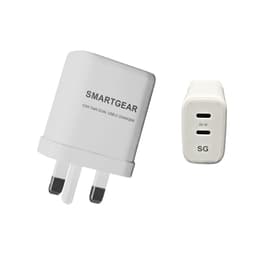
SmartGear 65W GaN Dual USB-C
- GaN III · Dual USB-C
- Samsung 45W PPS
- Foldable UK plug
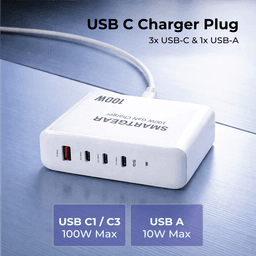
SmartGear 100W Desktop Station
- 4 ports · PD 3.1
- Charges MacBook Pro
- Desktop design
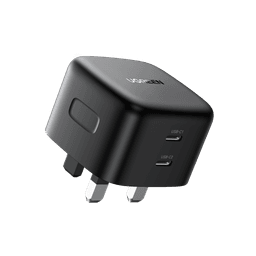
UGREEN Nexode 65W GaN
- 3 ports · Compact
- PPS for Samsung
- UK 3-pin plug
⚡ The Short Answer
Yes, GaN is worth it in 2026 — especially for chargers above 30 W. At 65 W+, GaN III chargers are 40–50% smaller, 35–45% lighter, and run 10–15 °C cooler than silicon equivalents. The price premium has shrunk to just £5–15. The only reason to choose silicon is if you're buying a basic 5–20 W charger where the size difference is negligible.
Full Comparison Table
| Feature | GaN Charger | Standard (Silicon) |
|---|---|---|
| Semiconductor material | ✅ Gallium Nitride (GaN) | Silicon (Si) |
| Generation (2026) | ✅ GaN III (3rd gen) | Mature technology |
| Energy efficiency | ✅ 93–95% | 80–87% |
| Size (65W example) | ✅ ~50 × 37 × 31 mm | ~75 × 55 × 28 mm |
| Weight (65W example) | ✅ 112–130 g | 180–220 g |
| Heat under load | ✅ 45–55 °C surface | 55–68 °C surface |
| Charging speed | Identical at same wattage | Identical at same wattage |
| Price (65W) | £30–£45 | ✅ £15–£25 |
| Price (100W) | £45–£70 | ✅ £35–£55 |
| Available wattages | ✅ 30W to 240W | 5W to 140W |
| Multi-port capability | ✅ 2–4 ports common at 65W | 1–2 ports at 65W |
| Travel-friendliness | ✅ Excellent — pocket-sized | Bulky — bag required |
| Lifespan | ✅ Longer (less heat degradation) | Shorter (heat stress) |
| Environmental impact | ✅ 8–15% less energy wasted as heat | Higher energy waste |
| Protocol support | ✅ PD 3.0, PD 3.1, PPS, QC 5.0 | PD 3.0, QC 3.0 (usually) |
| Brand availability | Anker, UGREEN, Baseus, Apple | Widespread (all brands) |
| UK safety certifications | CE/UKCA standard | CE/UKCA standard |
GaN wins 11 of 17 categories. Silicon wins on price only. 3 categories are ties.
Why GaN Wins in 2026
40–50% Smaller
GaN III semiconductors switch power 10× faster than silicon, requiring smaller transformers and capacitors. A 65 W GaN charger is physically smaller than many 30 W silicon adapters.
35–45% Lighter
Less material = less weight. A GaN III 65 W charger weighs 112–130 g compared to 180–220 g for silicon. For frequent travellers, this compounds across charger + power bank + cables.
10–15 °C Cooler
Higher efficiency means less energy wasted as heat. GaN chargers typically run at 45–55 °C vs 55–68 °C for silicon under sustained load. This improves safety and longevity.
8–15% More Efficient
GaN III achieves 93–95% energy conversion efficiency vs 80–87% for silicon. Over a year of daily use, this saves meaningful electricity and reduces environmental impact.
Enables Higher Wattages
GaN makes 140 W and 200 W portable chargers possible. A 200 W silicon charger would be the size of a brick. GaN makes high-power laptop charging genuinely portable.
More Ports Per Charger
The compact GaN architecture leaves room for additional ports. GaN 65 W chargers typically offer 3 ports; silicon 65 W chargers usually have 1–2.
Frequently Asked Questions
Does a GaN charger charge faster than a regular charger?
At the same wattage, no — a 65 W GaN charger and a 65 W silicon charger deliver identical charging speed. The GaN advantage is SIZE: it packs 65 W into a body half the size of a silicon equivalent, runs cooler, and is more energy-efficient. GaN also enables higher wattages (100 W, 140 W, 200 W) in portable sizes that would be impossible with silicon.
Is GaN safe?
Yes. GaN has been used in military and aerospace applications for decades before entering consumer electronics. GaN chargers meeting CE/UKCA standards pass the same safety tests as silicon chargers — over-voltage, over-current, over-temperature and short-circuit protection. The lower operating temperatures of GaN actually IMPROVE safety compared to silicon.
Why are GaN chargers more expensive?
GaN semiconductor wafers cost more to manufacture than silicon. However, prices have dropped significantly: in 2023, a 65 W GaN charger cost £50+; in 2026, you can buy one for under £30 (Baseus GaN5 Pro). As production scales, the premium over silicon continues to shrink.
Should I replace my existing silicon charger with GaN?
Not necessarily — if your current charger works fine and you don't need portability, keep it. Replace it with GaN when: (1) you want something more portable, (2) you need more ports, (3) you need 100 W+ power that's practical to carry, or (4) your current charger breaks.
What is GaN III vs GaN II vs GaN I?
Each generation improves efficiency and shrinks size. GaN I (2018–2020) was ~88% efficient. GaN II (2021–2023) reached ~91%. GaN III (2024–2026) achieves 93–95% efficiency. In practice, a GaN III 65 W charger is about 15% smaller than a GaN I equivalent.
Do all brands use the same GaN technology?
No. Anker uses their proprietary "GaN Prime" technology, UGREEN uses "GaN III" from Navitas Semiconductor, and Baseus uses GaN chips from Innoscience. The underlying GaN principle is the same, but implementations vary slightly in efficiency and thermal management.
Related Guides
Best GaN Chargers UK
Top-rated GaN chargers reviewed
Best 65W Chargers
The GaN sweet spot
Best 100W Chargers
High-power GaN chargers
100W vs 65W
Which wattage do you need?
PD 3.1 Explained
Next-gen power delivery
Anker vs UGREEN
GaN brand comparison
Why Chargers Overheat
Heat & safety explained
Charging Glossary
GaN, PPS, PD explained