Charging Technology Glossary
The A-Z of USB-C, GaN, Power Delivery, and everything charging. 84+ terms explained in plain English. Bookmark this page — it's updated regularly.
Charge faster with SmartGear
All productsOur own GaN chargers and cables, from £8.99. Free UK delivery, 30-day returns and a 1-year warranty.
Showing 84 of 84 terms
A
AC Adapter
HardwareA device that converts mains alternating current (AC) to the direct current (DC) required by electronic devices. Modern USB-C AC adapters integrate rectification, voltage regulation, and USB PD negotiation into a single compact unit. GaN-based AC adapters are 40% smaller than traditional silicon designs.
Adaptive Charging
BatteryAn AI-driven feature in Android 15+ and iOS 17+ that learns your daily routine and slows overnight charging to reduce battery stress. The phone charges to ~80% quickly, then trickles the last 20% to finish just before your alarm. Reduces long-term battery degradation by 10-15% compared to always fast-charging to 100%.
AFC (Adaptive Fast Charging)
StandardsSamsung's proprietary fast charging standard that delivers up to 15W. Superseded by Super Fast Charging (25-45W) on newer Samsung devices. Uses 9V/1.67A over standard USB cables. Still found on budget Galaxy A-series phones and older Galaxy S/Note models.
Amp (Ampere / A)
FundamentalsUnit measuring electrical current — how much electricity flows through a cable. Higher amps = faster charging. USB-C cables are rated 3A (standard) or 5A (for 100W+ charging). The relationship between watts, volts, and amps is: W = V × A.
APDO (Augmented Power Data Object)
StandardsThe specific Power Data Object type used for PPS (Programmable Power Supply) negotiation in USB PD 3.0+. APDOs define a voltage range and maximum current rather than a fixed point, allowing the device to request any voltage within the range in 20mV increments. Essential for Samsung Super Fast Charging.
Apple MagSafe
StandardsApple's magnetic wireless charging system for iPhone 12 and later. Delivers up to 15W wirelessly using aligned magnets. Based on the Qi standard with Apple-specific optimisations. Apple contributed the magnetic alignment technology to the open Qi2 standard in 2023.
B
Battery Cycle
BatteryOne full discharge and recharge of a battery (e.g., using 50% twice = one cycle). Lithium-ion batteries typically retain 80% capacity after 500-1000 cycles. Modern smartphones with adaptive charging can extend this to 1,200+ cycles by avoiding full 0-100% swings.
Battery Management System (BMS)
SafetyElectronic circuitry that monitors and protects a battery from overcharging, over-discharging, overheating, and short circuits. Every quality charger and device contains a BMS. The BMS also handles cell balancing in multi-cell power banks, ensuring all cells charge and discharge evenly.
BC 1.2 (Battery Charging Specification)
StandardsA USB standard defining how devices identify charger types. BC 1.2 recognises Standard Downstream Port (SDP, 500mA), Charging Downstream Port (CDP, 1.5A), and Dedicated Charging Port (DCP, up to 1.5A). Older than USB PD, BC 1.2 is still used for backward compatibility with USB-A ports.
Bidirectional Charging
TechnologyThe ability to both receive and supply power through the same port. USB PD 3.0+ supports role-swapping, allowing a device to switch from sink (receiving power) to source (providing power). Used in vehicle-to-home (V2H) systems and reverse wireless charging on Samsung/Pixel phones.
Braided Cable
HardwareA cable wrapped in woven nylon or similar material instead of rubber. Braided cables resist tangling, are more durable (10,000-30,000+ bend cycles vs 3,000-5,000 for rubber), and typically last 3-5x longer. Premium braided cables also use thicker copper conductors for lower impedance.
Buck Converter
TechnologyA voltage regulation circuit that steps down (reduces) voltage efficiently. Used inside chargers and devices to convert the negotiated USB PD voltage (e.g., 20V) to the battery's charging voltage (e.g., 4.2V). Modern buck converters achieve 95%+ efficiency. Also called a step-down converter.
Bypass Charging
TechnologyA technique where the charger's power goes directly to the phone's processor and screen, bypassing the battery entirely. Used by gaming phones (ASUS ROG, Xiaomi) to reduce battery heat during play. Also used by smart charging features during extended full-charge periods.
C
Cable Length Effect
FundamentalsLonger cables have higher electrical resistance, causing voltage drop and reduced charging speed. A 2m USB-C cable has roughly twice the resistance of a 1m cable. For 100W+ charging, use the shortest cable practical (ideally 1m or less). High-quality cables mitigate this with thicker copper conductors.
CC (Constant Current)
FundamentalsThe first phase of lithium-ion charging (0-~50%) where the charger delivers maximum current at a steady rate. This is the fastest charging phase and where "0-50% in 30 minutes" claims apply. The charger maintains a fixed current while voltage gradually rises toward the battery's maximum.
CE Marking
SafetyEuropean conformity marking indicating a product meets EU safety, health, and environmental requirements. Mandatory for chargers sold in the UK/EU. Not a quality mark — it's a legal requirement. In 2025, 72% of recalled Amazon UK chargers lacked CE/UKCA certification.
Charge Controller
TechnologyThe IC inside every rechargeable device that manages the flow of current into the battery. It negotiates power with the charger (via USB PD/QC), monitors battery temperature and voltage, and implements the CC/CV/trickle charging curve. The charge controller — not the charger — determines maximum charging speed.
CV (Constant Voltage)
FundamentalsThe second phase of lithium-ion charging (~50-80%) where voltage is held steady while current gradually decreases. Charging slows noticeably in this phase. The battery approaches its maximum voltage (typically 4.2V per cell), and current must taper to avoid overcharging.
D
DASH Charge
StandardsOnePlus's original fast charging brand (now SUPERVOOC). Used low voltage, high current approach to reduce heat in the phone by keeping voltage conversion in the charger. Rebranded after a trademark dispute with Amazon's Dash product line.
Deep Discharge
BatteryDraining a lithium-ion battery below 5-10% charge. Frequent deep discharges accelerate chemical degradation and can permanently reduce capacity. Most device BMS systems shut down the device at 1-3% to prevent damage. Best practice: try to keep batteries above 20%.
DisplayPort Alt Mode
StandardsAllows a USB-C cable to carry DisplayPort video signal to external monitors. Requires a USB-C cable with video support (USB 3.2+ or Thunderbolt). Not all USB-C cables support this — check for "video-capable" or "full-featured" labelling.
Dual-Cell Battery
BatteryA battery design splitting capacity across two cells connected in series, effectively doubling voltage. This halves the current needed for the same wattage (P = V × I), reducing heat. Used by Oppo/OnePlus SUPERVOOC (100W+) and some Samsung devices to enable ultra-fast charging safely.
E
E-Waste (Electronic Waste)
SafetyDiscarded electronic equipment including chargers, cables, and batteries. The UK generates 22,000 tonnes of charger/cable e-waste annually. The EU/UK USB-C mandate aims to reduce this by standardising on one connector. GaN chargers also help by using 40% less material per unit than silicon equivalents.
eMark Chip
HardwareAn electronic marker chip embedded in USB-C cables rated for 5A (100W+). The chip communicates the cable's power rating, data speed, and vendor ID to the charger during PD negotiation, enabling safe high-power delivery. Required for cables above 60W. Without it, chargers limit output to 60W as a safety precaution.
EPR (Extended Power Range)
StandardsUSB PD 3.1 feature enabling up to 240W power delivery over USB-C (48V @ 5A). Designed for gaming laptops, monitors, and high-power devices. Requires EPR-certified cables with eMark chips rated for 48V. Adds three new voltage rails: 28V, 36V, and 48V.
F
Fast Charging
StandardsGeneral term for any charging technology that exceeds the USB default of 5V/0.5A (2.5W). Typically 18W-45W for phones and 65W-140W for laptops. Multiple competing standards exist (USB PD, QC, PPS, SUPERVOOC), though USB PD is becoming the universal standard.
G
GaN (Gallium Nitride)
TechnologyA wide-bandgap semiconductor material replacing silicon in modern chargers. GaN transistors switch up to 3× faster than silicon, enabling chargers that are 40% smaller, run 15°C cooler, and achieve 93%+ power conversion efficiency. In 2026, 67% of premium chargers (>£30) in the UK are GaN-based.
GaN III / GaN V
TechnologyThird and fifth generation GaN power chips from manufacturers like Navitas and Innoscience. Each generation improves efficiency, reduces die size, and lowers heat. GaN V (2025) achieves 94%+ efficiency. Next-generation GaN-on-SiC substrates promise 95%+ efficiency.
H
Hot Swap
HardwareAbility to plug/unplug devices from a charging station without turning it off. All modern USB-C chargers support hot swapping with automatic power reallocation. Multi-port GaN chargers use intelligent power allocation to redistribute wattage within milliseconds when a device is added or removed.
I
Impedance
FundamentalsResistance to electrical current flow in a cable or circuit. Lower impedance = less power lost as heat. Quality cables have lower impedance due to thicker copper conductors, which is why cheap cables charge slower and get hotter. Measured in ohms (Ω).
Intelligent Power Allocation (IPA)
TechnologyTechnology in multi-port chargers that dynamically distributes total wattage across connected devices based on their needs. When you plug in a second device, the charger automatically reduces power to the first and reallocates. Also called Dynamic Power Distribution or Smart Power Sharing.
K
kWh (Kilowatt-hour)
FundamentalsUnit of energy used to measure electricity consumption. Charging a 5,000mAh phone from 0-100% uses approximately 0.019 kWh (about 0.5p at UK 2026 electricity rates). Charging a MacBook Air fully costs roughly 1.5p. Wireless charging uses 30-40% more electricity per charge due to lower efficiency.
L
Li-ion (Lithium-ion)
BatteryThe dominant rechargeable battery chemistry in phones, laptops, and power banks. Offers high energy density (150-250 Wh/kg) but degrades over time, especially with heat (above 35°C), deep discharges (below 20%), and prolonged storage at 100%. Retains ~80% capacity after 500-1,000 cycles.
Lightning
HardwareApple's proprietary 8-pin connector used on iPhone 5 through iPhone 14, and older iPads. Limited to ~12W charging and 480Mbps data (USB 2.0). Apple transitioned to USB-C starting with iPhone 15 in September 2023, in compliance with the EU/UK mandate. Lightning accessories are now legacy.
LiPo (Lithium Polymer)
BatteryA variant of lithium-ion using a polymer electrolyte. Slightly lighter and can be formed into thinner, custom shapes, making it common in slim smartphones and wearables. Similar performance characteristics and degradation patterns to standard Li-ion. Most modern phones use LiPo cells.
M
mAh (Milliamp-hour)
FundamentalsUnit measuring battery capacity at a fixed voltage. Higher mAh = longer battery life. Typical phone: 4,000-5,000mAh. Typical power bank: 10,000-26,800mAh. Not directly comparable across different voltages — use Wh for cross-device comparisons. Convert: Wh = mAh × V ÷ 1,000.
Memory Effect
BatteryA phenomenon in older nickel-cadmium (NiCd) batteries where partial discharge cycles reduced usable capacity. Does NOT affect modern lithium-ion or lithium-polymer batteries. You do not need to "train" or fully drain a modern phone battery — this is a persistent myth from the NiCd era.
MFi (Made for iPhone)
StandardsApple's licensing program ensuring third-party accessories meet Apple quality and safety standards. MFi-certified cables and chargers contain Apple authentication chips and are guaranteed compatible. The program covers Lightning, USB-C, and wireless accessories. Non-MFi products may trigger "accessory not supported" warnings.
Micro-USB
HardwareThe small trapezoidal connector that preceded USB-C on most Android phones and accessories. Limited to ~10W charging and 480Mbps data. Not reversible (only inserts one way). Still found on some budget earbuds, older power banks, and Kindle e-readers. Being phased out industry-wide.
Multi-Port Charger
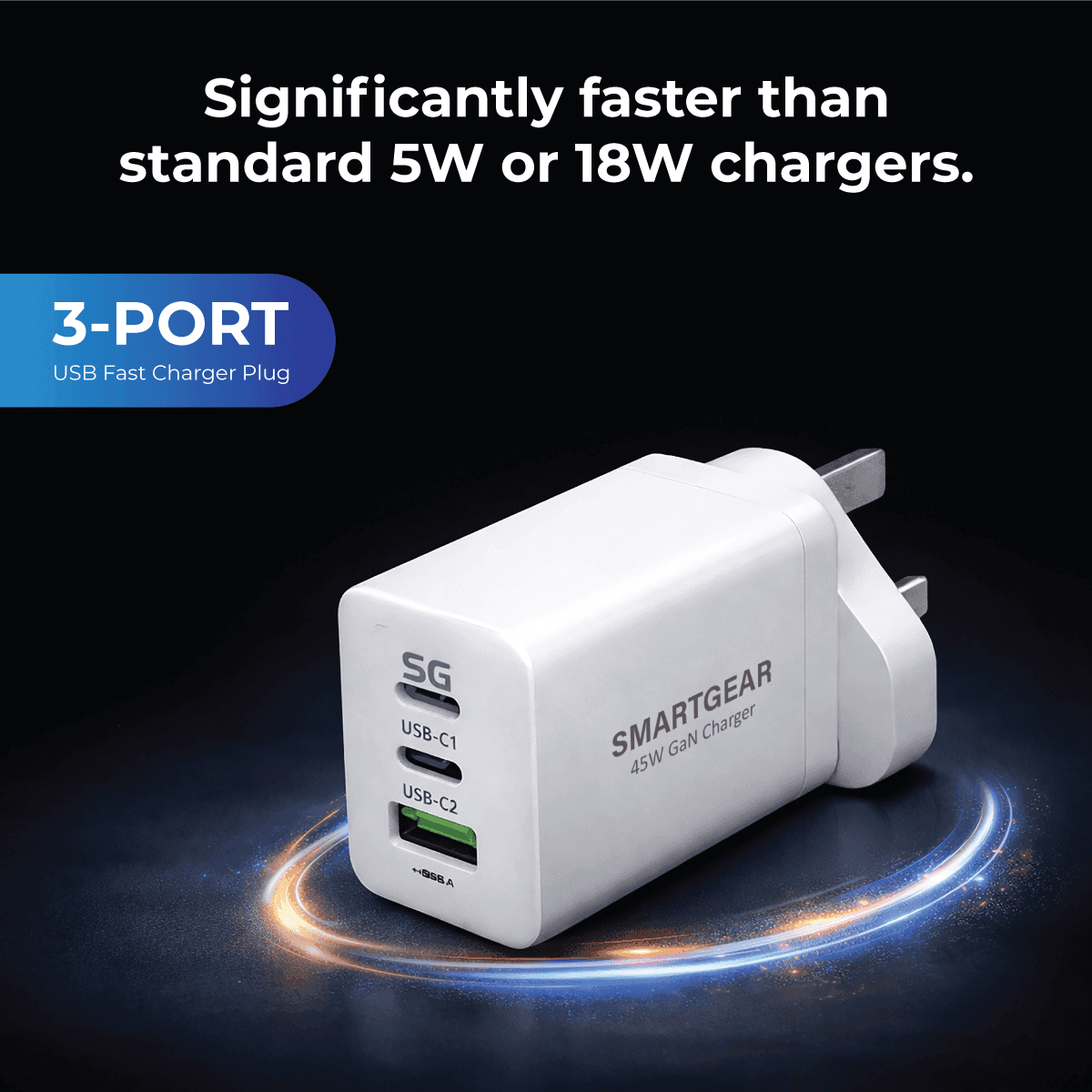
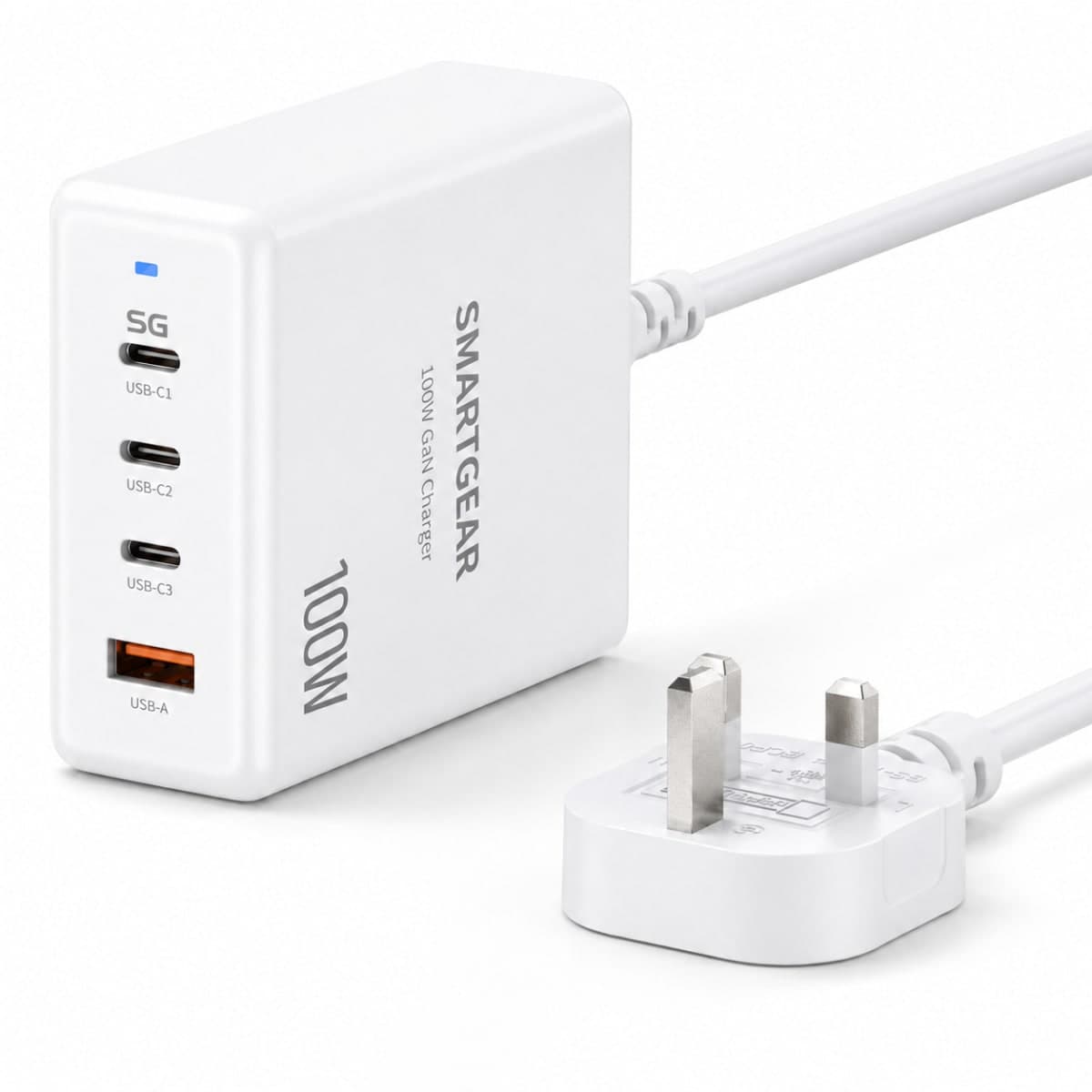
HardwareA charger with two or more USB ports (USB-C and/or USB-A) for simultaneously charging multiple devices. Modern GaN multi-port chargers offer 100-200W total power with intelligent allocation. Can replace 3-4 individual chargers, reducing desk clutter and plug socket usage.
N
NTC (Negative Temperature Coefficient)
SafetyA thermistor used in chargers and batteries to monitor temperature. When temperature rises, NTC resistance drops, signalling the charging circuit to reduce power. Essential safety component — chargers typically contain 2-3 NTC sensors for real-time thermal monitoring.
O
OCP (Overcurrent Protection)
SafetySafety circuit that cuts power if current exceeds safe limits. Prevents cable/device damage from short circuits or component faults. Standard in all certified chargers. Triggers within milliseconds of detecting an overcurrent condition.
OTP (Overtemperature Protection)
SafetySafety circuit that reduces or stops charging when the charger or device exceeds safe temperature thresholds (typically 40-45°C). Prevents fire and battery damage. Works in conjunction with NTC thermistors placed at key heat-generating components.
OVP (Overvoltage Protection)
SafetySafety circuit preventing voltage from exceeding safe levels. Protects connected devices from voltage spikes caused by mains surges, charger faults, or component failure. Typically triggers at 10-20% above the negotiated voltage level.
P
Passthrough Charging
HardwareAbility to charge a power bank and connected devices simultaneously. The power bank acts as a hub — wall charger powers the bank, which charges your phone. Reduces total charging time and is useful when sockets are limited (hotels, airports). Most quality power banks support this.
PD (Power Delivery)
StandardsUSB Power Delivery — the universal fast charging standard defined by the USB-IF. PD 3.0 supports up to 100W. PD 3.1 supports up to 240W via EPR. The most widely compatible fast charging protocol, supported by Apple, Samsung, Google, and all major laptop manufacturers.
PDO (Power Data Object)
StandardsSpecific voltage/current combinations a charger advertises to connected devices during USB PD negotiation. E.g., 5V/3A, 9V/3A, 15V/3A, 20V/5A. Devices select the optimal PDO based on their battery state and thermal conditions. A charger with more PDOs offers wider device compatibility.
Power Bank
HardwareA portable battery pack for charging devices on the go. Capacities range from 5,000mAh (pocket-sized) to 26,800mAh (laptop-capable). Key specs: capacity (mAh/Wh), output wattage, port types, and airline compliance (<100Wh for carry-on). Also called a portable charger.
PPS (Programmable Power Supply)
StandardsAn extension of USB PD 3.0 allowing fine-grained voltage adjustment in 20mV steps (via APDO). Enables more efficient charging with less heat by letting the device request its exact optimal voltage. Required for Samsung 45W Super Fast Charging and Google Pixel fast charging.
Pull-up Resistor (56kΩ)
SafetyA safety resistor in USB-C cables that tells the charger how much current the cable can handle. The USB-C specification mandates a 56kΩ pull-up resistor for safe operation. Missing or incorrect resistors in cheap cables can cause overcurrent, potentially damaging devices or causing fires.
Q
QC (Quick Charge)
StandardsQualcomm's fast charging technology. QC 3.0 delivers up to 36W, QC 4+ integrates USB PD and PPS compatibility, and QC 5.0 supports up to 100W. Widely supported on Android phones with Qualcomm Snapdragon processors. Modern QC versions are backward-compatible with USB PD.
Qi (pronounced "chee")
StandardsThe global wireless charging standard by the Wireless Power Consortium (WPC). Qi 1.x supports up to 15W via electromagnetic induction between a charging pad coil and device coil. The most widely supported wireless standard, built into over 2 billion devices worldwide.
Qi2
StandardsThe next-generation wireless charging standard (2024+) adding magnetic alignment (Magnetic Power Profile) to the Qi standard. Delivers 15W with better efficiency due to precise coil alignment. Universal and open — supported by Apple, Samsung, Google, and all major brands. Faster profiles expected by 2027.
R
Reverse Charging
TechnologyUsing your phone or device as a power source to charge other devices. Available as wired (USB OTG) or wireless (reverse wireless charging / Wireless PowerShare). Samsung, Google Pixel, and Huawei phones support this. Useful for topping up earbuds or a friend's phone in emergencies.
Ripple
FundamentalsSmall fluctuations in the DC output voltage of a charger. High ripple can interfere with touchscreens (causing "ghost touches"), produce audible noise, and damage sensitive components. Quality chargers minimise ripple to under 100mV peak-to-peak through better capacitor design and filtering.
S
SCP (Short-Circuit Protection)
SafetySafety circuit that instantly shuts down power output when a short circuit is detected. Prevents catastrophic failure, fire, and device damage. Activates within microseconds. Present in all certified chargers and cables. The 56kΩ pull-up resistor in USB-C cables assists SCP operation.
Self-Discharge
BatteryThe gradual loss of battery charge when a device is powered off and not in use. Lithium-ion batteries self-discharge at approximately 2-5% per month at room temperature. Higher temperatures accelerate self-discharge. Store power banks at 40-60% charge for long-term storage.
SiC (Silicon Carbide)
TechnologyAn alternative wide-bandgap semiconductor to GaN. Used in high-power applications (EV chargers, industrial power supplies, 200W+ consumer chargers). Excellent thermal conductivity makes it ideal for sustained high-power loads. Less common than GaN in portable chargers but emerging in desktop charging stations.
Smart Charging
TechnologyA broad term for any charging optimisation that adapts to conditions. Includes Adaptive Charging (learning routines), temperature-aware throttling, off-peak electricity scheduling, and battery health optimisation features. Apple's "Optimised Battery Charging" and Google's "Adaptive Charging" are leading examples.
SPR (Standard Power Range)
StandardsUSB PD operating at up to 100W (20V @ 5A). The most common power range for consumer devices — phones, tablets, laptops, and power banks. Distinguished from EPR (Extended Power Range) which extends to 240W using higher voltages (28V, 36V, 48V).
Super Fast Charging
StandardsSamsung's 25W and 45W fast charging standard using PPS (Programmable Power Supply). Requires a PD 3.0 + PPS compatible charger and USB-C cable. Available on Galaxy S21 and later. 25W is the default; 45W is supported on Ultra and some Tab models only.
SUPERVOOC
StandardsOppo/OnePlus's proprietary fast charging delivering 65W-240W. Uses a dual-cell battery design (series connection) and custom charge-pump ICs to halve charging current at the phone, dramatically reducing heat. Among the fastest smartphone charging technologies — 100% in under 20 minutes at 150W+.
Surge Protection
SafetyCircuitry or devices that protect electronics from voltage spikes on the mains supply (e.g., lightning, grid switching). USB chargers have internal surge protection, but a surge-protected power strip adds an extra layer. UK standard BS 1363 plugs include a fuse as basic surge protection.
T
Thermal Throttling
BatteryAutomatic reduction of charging speed when temperature exceeds safe limits (typically 40-45°C). Protects battery health but slows charging. More common with wireless charging, direct sunlight, and in hot environments. Remove phone cases and avoid charging in direct sunlight to minimise throttling.
Thunderbolt 4
StandardsIntel's high-performance connection standard over USB-C. Delivers 40 Gbps bidirectional data, dual 4K display output (or one 8K), and up to 100W charging through a single cable. Requires certified cables. Thunderbolt 5 (2024+) doubles bandwidth to 80 Gbps and supports 240W power.
Travel Adapter
HardwareA charger designed for international use with interchangeable or folding plug pins for different countries (UK, EU, US, AU). The best travel chargers combine multi-country compatibility with GaN efficiency and multi-port output. Not to be confused with a simple plug converter, which has no voltage regulation.
Trickle Charge
FundamentalsThe final phase of battery charging (typically 80-100%) where current is reduced to a trickle to safely top off the battery without overcharging. This is why the last 20% takes disproportionately long. Modern smart charging features extend the trickle phase overnight to reduce battery stress.
U
UKCA (UK Conformity Assessed)
SafetyThe UK equivalent of CE marking, required since Brexit for electrical products sold in Great Britain. Confirms the product meets UK safety regulations (Electrical Equipment Safety Regulations 2016). Check for this mark on all chargers bought in the UK. Products with only CE marking may still be sold in Northern Ireland.
UL Certification
SafetySafety certification from Underwriters Laboratories, an independent testing organisation. UL-listed products have been tested for fire, shock, and casualty hazards. Widely recognised globally. Many premium charger brands (Anker, UGREEN, Baseus) submit products for UL certification as an additional safety assurance beyond CE/UKCA.
USB 2.0 / 3.2
StandardsUSB version numbers define data transfer speeds: USB 2.0 = 480 Mbps, USB 3.2 Gen 1 = 5 Gbps, USB 3.2 Gen 2 = 10 Gbps, USB 3.2 Gen 2×2 = 20 Gbps. These are data standards, separate from USB PD (power). A USB 2.0 cable can still deliver 240W if it has the right power rating.
USB PD 3.0
StandardsUSB Power Delivery version 3.0 — supports up to 100W (20V/5A) via Standard Power Range. Introduced PPS (Programmable Power Supply) for fine-grained voltage control. The most widely supported fast charging standard across Apple, Samsung, Google, and laptop manufacturers.
USB PD 3.1
StandardsUSB Power Delivery version 3.1 — extends maximum power to 240W (48V/5A) via Extended Power Range (EPR). Adds three new fixed voltage levels: 28V, 36V, and 48V. Designed for gaming laptops, monitors, and high-power devices. Requires EPR-rated cables and chargers.
USB-A
HardwareThe rectangular USB connector found on older chargers, computers, and peripherals. Limited to ~12W charging with BC 1.2, or up to 28W with QC 3.0. Being phased out in favour of USB-C but still common on multi-port chargers for legacy device support (earbuds, older tablets, Kindles).
USB-C (USB Type-C)
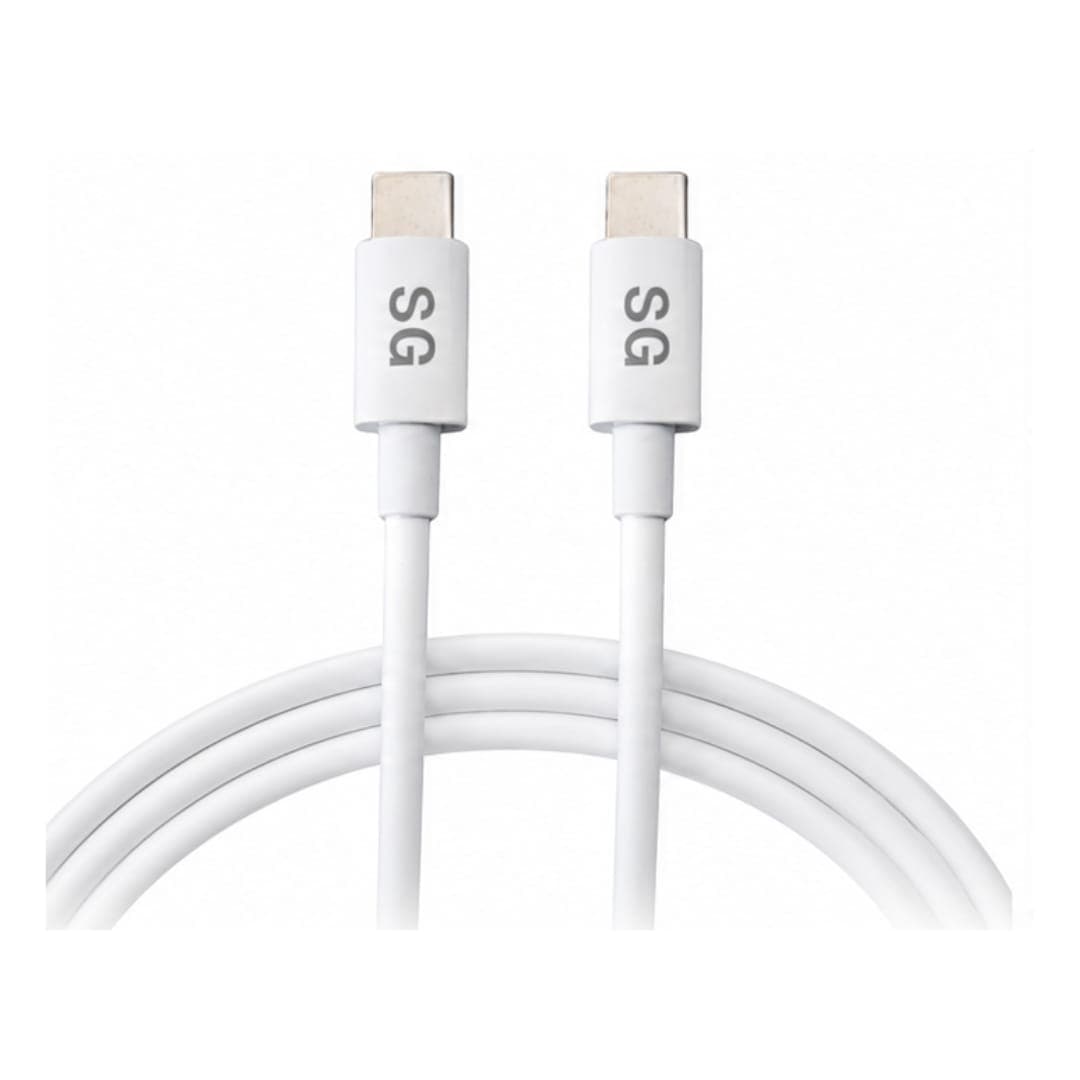
HardwareThe universal, reversible USB connector now standard on phones, tablets, laptops, and accessories. Supports charging (up to 240W), data (up to 40 Gbps via USB4), and video output (DisplayPort Alt Mode). Mandatory in the EU/UK for smartphones since December 2024. The only connector most people need in 2026.
USB-IF
StandardsUSB Implementers Forum — the non-profit organisation that defines USB standards, certifies products, and manages the USB trademark. Products certified by USB-IF carry a logo guaranteeing interoperability. Membership includes Apple, Google, Intel, Samsung, and 700+ other companies.
USB4
StandardsThe latest USB standard delivering up to 40 Gbps (80 Gbps with USB4 v2), Thunderbolt 3 compatibility, and up to 240W power delivery via USB PD 3.1. Uses USB-C connectors exclusively. USB4 v2 (2024) supports 120 Gbps asymmetric mode for display applications.
V
Volt (V)
FundamentalsUnit measuring electrical potential difference (pressure). Standard USB is 5V. Fast charging uses 9V, 12V, 15V, or 20V. USB PD 3.1 EPR adds 28V, 36V, and 48V. Higher voltage = more power capability, but requires thicker cable insulation and eMark chips above 20V.
Voltage Drop
FundamentalsThe reduction in voltage that occurs as current flows through a cable due to electrical resistance. Greater in longer, thinner cables. A significant voltage drop can cause the charger to renegotiate a lower power level or fail to fast-charge. Quality cables with thick copper conductors minimise voltage drop.
VOOC
StandardsOppo's original fast charging technology (2014) using high current at low voltage. Predecessor to SUPERVOOC. Delivered 20-25W and was notable for keeping phones cool during charging by performing voltage conversion in the charger rather than the phone.
W
Wall Charger
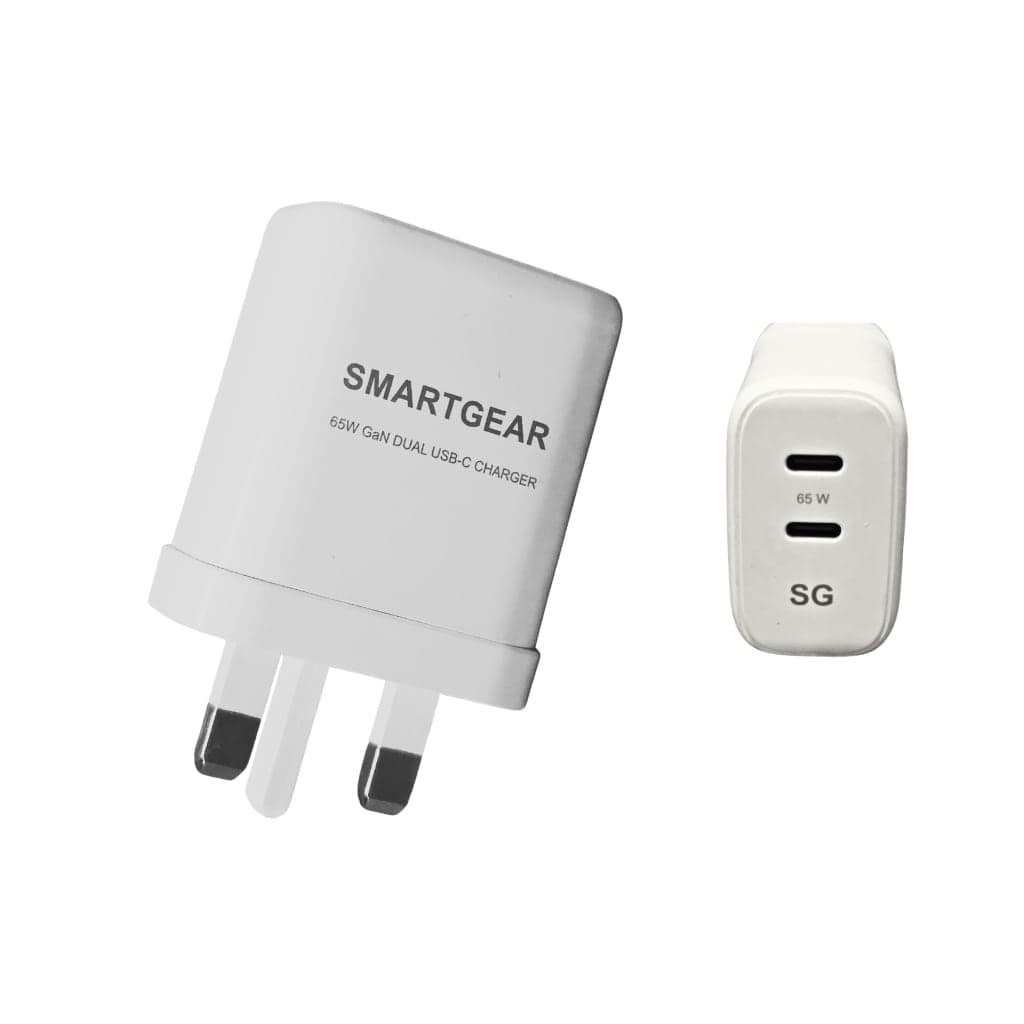
HardwareA charger that plugs directly into a wall socket, as opposed to a desktop charging station with a separate power cable. Modern GaN wall chargers offer 65-140W in a compact form factor. The best wall chargers feature foldable UK 3-pin plugs for portability.
Watt (W)
FundamentalsUnit measuring power (Volts × Amps = Watts). The single most important spec for charging speed. 5W = slow. 20W = phone fast charge. 45W = Samsung Super Fast. 65W = most laptops. 100W = high-power laptops. 140W = MacBook Pro 16". 240W = USB PD 3.1 maximum.
Wh (Watt-hour)
FundamentalsUnit measuring energy capacity independent of voltage. Used for laptop batteries and power banks. A 100Wh power bank can theoretically deliver 100W for 1 hour, or 20W for 5 hours (minus efficiency losses). Airlines cap carry-on power banks at 100Wh (160Wh with approval).
Wireless Charging
TechnologyCharging via electromagnetic induction without a physical cable connection. Standards include Qi (up to 15W) and Qi2 (15W with magnetic alignment). Slower and less efficient than wired charging (60-70% vs 85-95%) but offers the convenience of simply placing a device on a pad.
Wireless Power Consortium (WPC)
StandardsThe international industry body that develops and maintains the Qi and Qi2 wireless charging standards. Founded in 2008, the WPC has 350+ member companies including Apple, Samsung, Google, and LG. Responsible for certifying Qi/Qi2 products and setting interoperability requirements.
Cite This Glossary
This glossary is free to reference and link to under CC BY 4.0. We appreciate a dofollow link:
<a href="https://smartgearoutlet.co.uk/resources/charging-glossary">Charging Glossary by SmartGearOutlet</a>