2026 Power Bank Buying Guide: How to Choose the Right Portable Charger
With thousands of power banks flooding the market, choosing the right portable charger can feel overwhelming. Wrong choice? You'll either overpay for capacity you don't need or get stranded with insufficient power.
This comprehensive guide breaks down capacity calculations, battery technologies, fast charging protocols, and safety certifications to help you make an informed decision for your specific needs.
Key Takeaways
- Capacity isn't everything - match output wattage to your device requirements
- Wh (Watt-hours) matters more than mAh for comparing real capacity
- UL 2056 certification is non-negotiable for safety
- For air travel, stay under 100Wh (typically 25,000mAh at 3.7V)
- USB-C PD support is essential for fast charging modern devices
Understanding Capacity: mAh vs Wh (The Math That Matters)
Power bank capacity is advertised in mAh (milliamp-hours), but this doesn't tell the whole story. What you really need to know is Wh (Watt-hours).
The Conversion Formula
Wh = (mAh × Voltage) ÷ 1,000
Most power banks use 3.7V cells
20,000 × 3.7 ÷ 1,000 = 74 Wh
10,000 × 3.7 ÷ 1,000 = 37 Wh
Why This Matters
A "20,000mAh" power bank doesn't deliver 20,000mAh to your phone. Due to voltage conversion (3.7V → 5V/9V) and efficiency losses (10-15%), you'll get approximately 12,000-13,000mAh of usable capacity.
Real-world rule: Expect 60-70% of advertised mAh as actual usable capacity.
Capacity Recommendations by Device
Smartphone (iPhone, Android)
Device Battery
3,000-5,000 mAh
Recommended Capacity
10,000 mAh
Expected Charges
2-3 full charges
Use Case: Perfect for daily carry and weekend trips
Tablet (iPad, Android Tablet)
Device Battery
7,000-10,000 mAh
Recommended Capacity
20,000 mAh
Expected Charges
1.5-2 full charges
Use Case: Essential for travel and long flights
Laptop (13-14" Ultrabook)
Device Battery
40-60 Wh
Recommended Capacity
20,000-25,000 mAh (74-93 Wh)
Expected Charges
1-1.5 full charges
Use Case: Must stay under 100Wh for TSA compliance
Multiple Devices
Device Battery
Various
Recommended Capacity
25,000-30,000 mAh
Expected Charges
5-8+ device charges
Use Case: For travel or family use
Shop Power Banks — Buy Now
TSA-compliant · USB-C PD · Free UK delivery
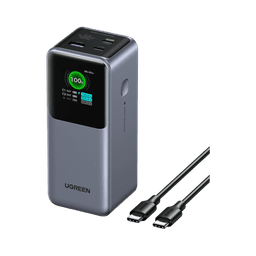
UGREEN 25000mAh 200W
- 200W PD 3.1 output
- 5–6 phone charges
- Airline-safe 90Wh
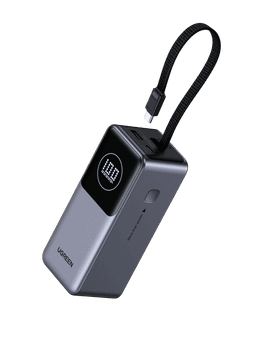
UGREEN 20000mAh 145W
- Built-in USB-C cable
- 4–5 phone charges
- 430g lightweight
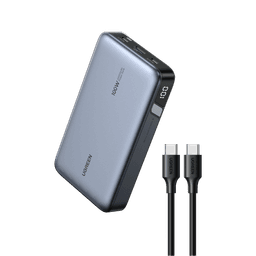
Browse UGREEN Power Banks
- 10K–48K mAh
- MagSafe options
- Laptop charging
Battery Cell Technology: Li-Ion vs Li-Polymer
The type of battery cells inside your power bank affects weight, longevity, and performance. Here's what you need to know:
Lithium-Ion (18650/21700 Cells)
RecommendedPros
- •Higher energy density
- •Better discharge rates
- •More charging cycles (500-800)
- •Lower cost per mAh
Cons
- •Heavier than polymer
- •Rigid cylindrical shape
- •Slightly higher heat generation
Best For: High-capacity power banks (20,000mAh+), frequent use
Lithium-Polymer (LiPo)
Pros
- •Lighter weight
- •Flexible form factors
- •Slimmer designs possible
- •Lower heat generation
Cons
- •Lower energy density
- •Fewer charging cycles (300-500)
- •Higher cost
- •More sensitive to damage
Best For: Portable, slim power banks (5,000-10,000mAh), occasional use
Bottom Line
For most users, Lithium-Ion (18650 or 21700 cells) offers better value, longevity, and performance. Choose Li-Polymer only if you need an ultra-slim form factor and use it occasionally.
Fast Charging Protocols: What Your Power Bank Must Support
Not all fast charging is created equal. Your power bank needs to support the charging protocols your devices use.
USB Power Delivery (PD)
Must HaveMax Power
Up to 100W (240W for PD 3.1)
Compatible Devices
iPhones, iPads, MacBooks, Android phones, Windows laptops
Note: Universal standard - most important to have
Qualcomm Quick Charge (QC)
ImportantMax Power
Up to 100W (QC 5.0)
Compatible Devices
Android phones with Snapdragon processors
Note: Common on Android devices, backwards compatible
Samsung Adaptive Fast Charging (AFC)
Nice to HaveMax Power
Up to 45W
Compatible Devices
Samsung Galaxy devices
Note: Samsung-specific, falls back to USB PD
Programmable Power Supply (PPS)
ImportantMax Power
Variable (typically 25-45W)
Compatible Devices
Latest Android phones, Samsung Super Fast Charging
Note: Part of USB PD 3.0, provides voltage fine-tuning
Minimum Requirements for 2026
- USB Power Delivery (PD) 3.0 or 3.1 - Non-negotiable for modern devices
- PPS (Programmable Power Supply) - For Samsung Super Fast Charging and battery health
- Qualcomm Quick Charge 3.0+ - If you use Android phones
Safety Certifications: Don't Skip This Section
Why Safety Matters
Lithium-ion batteries are energy-dense and potentially hazardous. Poorly made power banks have caused fires, explosions, and injuries. Safety certifications aren't optional marketing - they're proof of rigorous testing.
UL 2056
Comprehensive safety for power banks
What's Tested:
- Overcharge protection
- Over-discharge protection
- Short circuit protection
- Thermal testing
Importance: Critical - lithium battery safety standard
CE Marking
European safety compliance
What's Tested:
- Electromagnetic compatibility
- Electrical safety
- Environmental standards
Importance: Required for sale in EU, good quality indicator
FCC (USA) / IC (Canada)
Electromagnetic interference standards
What's Tested:
- Radio frequency emissions
- Interference testing
Importance: Required for North American sale
RoHS Compliance
Hazardous materials restriction
What's Tested:
- Lead-free
- Mercury-free
- Cadmium-free
- Safe material use
Importance: Environmental safety, non-toxic materials
The Non-Negotiable Certification
UL 2056 is the gold standard for power bank safety. It's the only certification specifically designed for lithium battery power banks. If a power bank doesn't have UL 2056, don't buy it - regardless of price.
TSA Regulations & Air Travel Guidelines
If you travel by air, you must comply with TSA and IATA regulations for lithium batteries. Violating these rules means confiscation - and possibly being denied boarding.
TSA Power Bank Rules (2026)
Allowed in carry-on luggage. No airline approval needed. Limit: typically 2-4 units.
Requires airline approval. Limit: 2 units maximum. Must be in carry-on only.
Prohibited on all passenger aircraft. Cannot be carried on or checked.
Pro Traveler Tip
For hassle-free travel, stick to 20,000-25,000mAh power banks (74-93Wh). These are well under the 100Wh limit, provide ample capacity for most trips, and never require special approval. Brands like UGREEN and Baseus clearly label Wh ratings on TSA-compliant models.
Matching Power Bank to Your Lifestyle
The "best" power bank depends entirely on how you'll use it. Here's how to match capacity and features to your specific needs:
Daily Commuter
Time Away from Power
8-12 hours away from power
Devices to Charge
1 smartphone
Recommended Capacity
5,000-10,000 mAh
Key Features Needed:
- Compact size (pocket-friendly)
- Built-in cable preferred
- 18W+ fast charging
Recommended: UGREEN Mini, Baseus Magnetic
Business Traveler
Time Away from Power
1-3 days
Devices to Charge
Laptop + smartphone + wireless earbuds
Recommended Capacity
20,000-25,000 mAh (under 100Wh)
Key Features Needed:
- 65W+ USB-C PD output
- 2-3 ports
- TSA compliant
- Pass-through charging
Recommended: UGREEN 25000mAh, Baseus Blade
International Traveler
Time Away from Power
5-14 days
Devices to Charge
Multiple phones, tablet, laptop, camera
Recommended Capacity
25,000-30,000 mAh
Key Features Needed:
- Multi-port (3-4 ports)
- 100W+ total output
- Digital display
- Fast recharge (2-3 hrs)
Recommended: UGREEN 300W Power Station, Baseus 30000mAh
Emergency Backup
Time Away from Power
Weeks to months between uses
Devices to Charge
Any device in emergency
Recommended Capacity
20,000 mAh
Key Features Needed:
- Low self-discharge
- Durable build
- LED flashlight
- Long warranty
Recommended: UGREEN Rugged, Baseus 20W
2026 Brand Comparison: UGREEN vs Baseus vs Anker
UGREEN
Key Strengths
- USB-IF certification standard
- Excellent heat management
- Wide capacity range
- Great warranty support
Best For
Business travelers, laptop charging, reliability
Price Range
$$-$$$
Standout Product: 25000mAh with 145W total output
Baseus
Key Strengths
- Premium designs
- Digital displays
- GaN charging tech
- Fast recharge times
Best For
Tech enthusiasts, premium features, aesthetics
Price Range
$$-$$$
Standout Product: Blade series with 100W laptop charging
Anker
Key Strengths
- Brand reputation
- PowerIQ technology
- Wide availability
- Good customer service
Best For
Mainstream users, proven track record
Price Range
$$$
Standout Product: PowerCore series with MagSafe
Find Your Perfect Power Bank
UL 2056 certified · Fast charging · Trusted brands
UGREEN 25000mAh 200W
- 200W PD 3.1 output
- 5–6 phone charges
- Airline-safe 90Wh
UGREEN 20000mAh 145W
- Built-in USB-C cable
- 4–5 phone charges
- 430g lightweight
Browse UGREEN Power Banks
- 10K–48K mAh
- MagSafe options
- Laptop charging
5 Common Power Bank Buying Mistakes to Avoid
Mistake #1: Only looking at mAh rating
Why It's a Problem:
mAh doesn't account for voltage. A 20,000mAh power bank at 3.7V = 74Wh, not enough for some laptops needing 80Wh+
The Solution:
Check Wh (Watt-hours) rating: Wh = (mAh × Voltage) ÷ 1000. Look for 74Wh+ for laptops.
Mistake #2: Buying cheap unbranded units
Why It's a Problem:
Fake capacity claims, no safety certifications, fire risk, poor cell quality leads to rapid degradation
The Solution:
Stick to known brands with UL 2056 certification. $10 savings isn't worth fire risk.
Mistake #3: Ignoring output wattage
Why It's a Problem:
A 30,000mAh power bank with 18W output can't charge a 65W laptop at usable speeds
The Solution:
Match output wattage to device needs: 65W+ for laptops, 30W+ for tablets, 20W+ for phones.
Mistake #4: Exceeding TSA limits for flights
Why It's a Problem:
Power banks over 100Wh (27,027mAh at 3.7V) are prohibited in carry-on. Will be confiscated.
The Solution:
For air travel, stay at or below 25,000mAh. Check airline-specific rules for international flights.
Mistake #5: Not checking port compatibility
Why It's a Problem:
Having only USB-A ports when all your devices need USB-C, or no laptop charging capability
The Solution:
Ensure at least 1-2 USB-C ports with PD support. USB-A ports for legacy devices.
Making Your Decision
Final Checklist Before You Buy
A quality power bank is an investment in convenience, productivity, and peace of mind. By understanding capacity math, prioritizing safety certifications, and matching features to your lifestyle, you'll find the perfect portable charger that serves you reliably for years.
In Stock at SmartGear — Free UK Delivery
Continue Learning
Related Articles
Continue learning with these helpful guides
Best Phone & Laptop Chargers in the UK (2026): Expert Reviews & Buying Guide
Expert-tested reviews of the best phone and laptop chargers available in the UK market. UGREEN, Baseus, and Anker compared with real-world performance data.
Best Power Banks for Festivals & Camping UK (2026)
Expert-tested guide to the best power banks for UK festivals. Capacity advice, weather-proofing tips, airline rules, and top portable charger picks for Glastonbury, Reading & more.
145W vs 200W Power Bank: Which Should You Buy? (2026 Guide)
Complete comparison of 145W and 200W laptop power banks. Wattage explained, real-world charging speeds, airline rules, and which UGREEN model is right for you.